Logistics in 2025: How AI, Automation, and Sustainability Are Forging a New
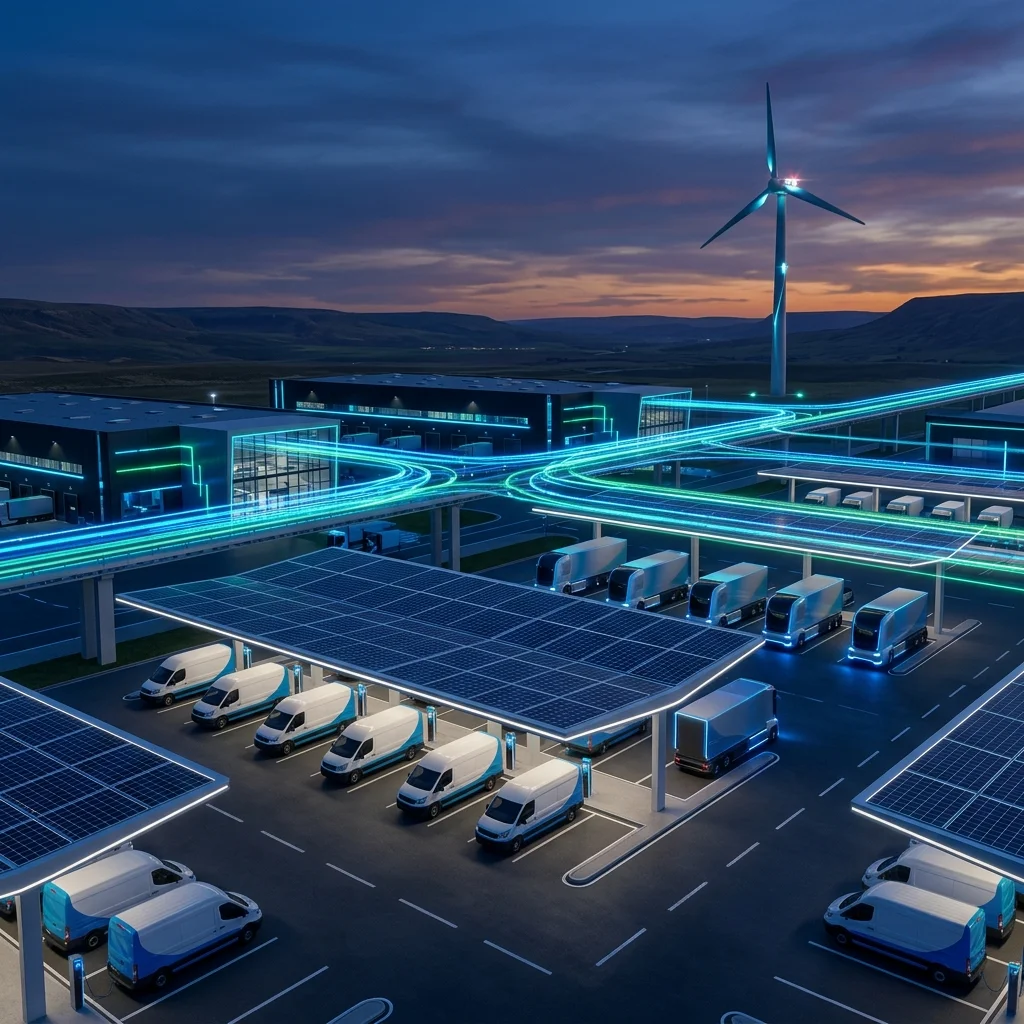
Logistics in 2025: How AI, Automation, and Sustainability Are Forging a New Supply Chain Reality
Global e-commerce sales are on track to hit $7.4 trillion by 2025, while labor costs in logistics climb 9.5% year-over-year. These twin pressures are forcing companies to fundamentally rethink supply chain operations. The result is a logistics landscape defined by three converging forces: intelligence at scale through AI and automation, sustainability as a core business strategy, and customer-centric delivery that demands near-instant fulfillment.
This article examines the hidden economic logic behind these trends—how automation responds to cost pressures while creating competitive moats, how sustainability shifts from regulatory compliance to market differentiation, and how rising customer expectations reshape network design. Case studies from UPS, PepsiCo, Unilever, Deutsche Post, Torc Robotics, and JUSDA illuminate both the opportunities and the trade-offs logistics leaders must navigate in 2025.
The New Logistics Landscape: Driving Forces
Three structural shifts are converging to create a perfect storm for the logistics industry.
E-commerce demand shows no signs of slowing. Global online retail sales are projected to reach $7.4 trillion by 2025, up from roughly $5.8 trillion in 2023. This growth pulls demand for faster, more flexible delivery options, pressuring networks that were originally designed for pallet-sized shipments to handle individual parcels. Same-day and next-day delivery windows, once premium offerings, are now baseline expectations in many markets. Labor cost inflation is eroding margins. Year-over-year wage increases of 9.5% in warehousing and transportation are squeezing already-thin profit margins. The shortage of truck drivers and warehouse workers, exacerbated by aging demographics in developed economies, means companies cannot simply hire their way out of capacity constraints. Automation—from robotic picking systems to autonomous yard trucks—becomes an economic necessity rather than a futuristic option. Technology maturity unlocks transformation. Artificial intelligence, the Internet of Things (IoT), and advanced robotics have crossed critical thresholds of reliability and affordability. Cloud computing enables real-time data sharing across fragmented supply chains, while machine learning models can now handle the complexity of dynamic route optimization and demand forecasting. The pieces are finally in place to overhaul legacy infrastructure.Together, these forces create an imperative: companies must simultaneously cut costs, meet aggressive sustainability targets, and exceed rising customer expectations—all while navigating geopolitical uncertainty and volatile fuel prices.
[IMAGE: Line graph showing global e-commerce revenue growth from 2020 to 2025 (projected $7.4T), with a secondary bar chart illustrating annual labor cost increases of 9.5%. Highlight key inflection points such as the 2023 acceleration in automation investment.]
Intelligence at Scale: AI and Automation in Action
The most visible transformation in 2025 logistics is the deployment of AI and automation across the entire supply chain—from long-haul trucking to last-mile delivery. Companies are no longer piloting these technologies; they are scaling them.
Route Optimization Reimagined
UPS's ORION (On-Road Integrated Optimization and Navigation) system has become a benchmark for AI-powered logistics. Originally developed to minimize miles driven and fuel consumption, ORION now uses machine learning to analyze over 200 variables per route—including traffic patterns, delivery windows, and vehicle capacity. The result: UPS saves an estimated 100 million miles annually, cutting fuel costs and carbon emissions simultaneously. The system's evolution reflects a broader trend: route optimization is shifting from static algorithms to dynamic, real-time decision-making that adapts to changing conditions.
AI-Driven Demand Forecasting
PepsiCo and Unilever have both deployed machine learning models to improve forecast accuracy. By ingesting data from point-of-sale systems, weather forecasts, social media trends, and historical sales, these systems reduce stockouts and overstock situations. PepsiCo reports a 20% improvement in forecast accuracy for its beverage and snack categories, which translates to lower warehousing costs and fresher products for retailers. For supply chains managing thousands of SKUs, even a few percentage points of improvement generate significant savings.
Autonomous Trucks Hit the Road
Long-haul trucking, which accounts for a large share of logistics costs, is undergoing a fundamental shift. Torc Robotics, a subsidiary of Daimler Truck, is developing Level 4 autonomous systems for Freightliner trucks. Level 4 autonomy means the vehicle can handle all driving tasks under certain conditions (e.g., highways) without human intervention. Torc's trucks have logged millions of test miles across the United States, and the company plans commercial deployment by 2027. The economic logic is compelling: autonomous trucks can operate nearly 24 hours a day (excluding mandatory rest breaks for human drivers), reducing per-mile costs by 30–40% while addressing the persistent driver shortage.
Yard Automation Reduces Bottlenecks
Warehouse yard operations—the movement of trailers between docks and parking spots—are often overlooked but represent a major efficiency gap. ISEE, a Boston-based startup, offers autonomous yard trucks that can navigate crowded lots, hook and unhook trailers, and coordinate with dock scheduling systems. Early adopters report 50% reductions in trailer wait times and a 30% improvement in dock utilization. These gains compound across a network: faster turnaround at distribution centers means fewer trucks idling at gates and more predictable inbound flows.
Real-Time Supply Chain Visibility
Visibility platforms have matured from simple tracking dashboards to AI-driven control towers. JUSDA's JusLink platform exemplifies this evolution. JusLink integrates data from suppliers, factories, carriers, and customers, providing end-to-end transparency. When a disruption occurs—a port closure, a weather event, a machine breakdown—the system not only alerts stakeholders but also recommends alternative routings or inventory rebalancing. For multinational supply chains where a single delay can cascade across continents, real-time visibility is becoming a competitive necessity.
[IMAGE: Infographic depicting a logistics network with AI nodes labeled at route planning, warehouse management, yard operations, and last-mile delivery. Icons represent ORION, JusLink, Torc autonomous trucks, and ISEE yard vehicles, with data flow lines connecting them.]
The Green Imperative: Sustainability as a Business Strategy
Sustainability in logistics has moved beyond corporate social responsibility reports. In 2025, carbon-neutral supply chains are a brand asset, an investor expectation, and, increasingly, a regulatory requirement.
Fleet Electrification Gains Momentum
Deutsche Post DHL Group has committed €500 million ($552 million) to electrify its transport fleet, including electric vans for last-mile delivery and e-bikes and cargo cycles for dense urban areas. The company's StreetScooter electric vans, now deployed in dozens of European cities, have already reduced CO₂ emissions by tens of thousands of tons per year. The investment reflects a strategic bet: as carbon taxes rise and city centers impose low-emission zones, zero-emission fleets become a license to operate in profitable urban markets.
Carbon Neutrality as a Differentiator
PepsiCo and Unilever have both announced ambitious carbon reduction targets, but their approaches differ. PepsiCo is focusing on regenerative agriculture and electrifying its direct operations, while Unilever is pushing its suppliers to adopt science-based targets. Both companies are discovering that sustainability drives customer loyalty—especially among younger consumers—and can command premium pricing. In B2B contexts, retailers increasingly demand carbon footprint data from their logistics partners, making sustainability a competitive filter.
The EV Trade-Off: Range vs. Speed
One of the knottiest challenges in sustainable logistics is the tension between electric vehicle (EV) range limitations and same-day delivery expectations. A typical electric delivery van has a range of 100–150 miles under real-world conditions, compared to 300+ miles for diesel equivalents. For urban last-mile routes, this is usually sufficient. But for same-day deliveries that require extended travel or multiple drop-offs, EVs introduce range anxiety and charging downtime.
Innovative solutions are emerging: some logistics companies are deploying fast-charging hubs at the edge of city centers, allowing drivers to recharge during midday breaks. Others are using "micro-hubs"—small urban warehouses where goods are transferred from long-haul trucks to e-bikes or small EVs—to minimize the distance electric vehicles must travel. The challenge underscores a broader reality: sustainability and customer-centric delivery are not always aligned; trade-offs must be actively managed.
Alternative Fuels and Carbon Offsets
While electrification dominates headlines, other decarbonization strategies are also gaining traction. Renewable natural gas (RNG) from landfills is being used to fuel heavy-duty trucks in California. Companies are also investing in carbon offsets, though skepticism about their effectiveness has led to stricter standards. The most forward-thinking firms treat offsets as a bridge solution, not a permanent fix—using them only for emissions that cannot be eliminated through direct operational changes.
[IMAGE: Split comparison: on the left, a Deutsche Post electric van being charged at a solar-panel-equipped hub; on the right, a traditional diesel truck with an overlay showing CO₂ metrics. Small inset shows a range comparison chart highlighting EV vs diesel under same-day delivery scenarios.]
Customer-Centric Logistics: Real-Time, Personalized, and Instant
The third pillar of the 2025 logistics transformation is the elevation of customer experience to a supply chain design principle. Logistics is no longer just about moving goods from A to B; it is about creating a seamless, personalized, and transparent experience.
Real-Time Tracking Becomes the Floor
Real-time tracking has evolved from a "nice-to-have" feature to a basic expectation. Consumers now expect to see a delivery timer counting down to the exact minute, with the ability to reroute a package mid-transit. For businesses, real-time tracking reduces customer service inquiries and increases trust. Advanced systems go further: they use GPS and IoT sensors to monitor temperature, humidity, and shock, alerting customers if a sensitive shipment is compromised.
Hyper-Personalized Delivery Windows
Logistics algorithms are learning individual preferences. A customer who regularly works from home on Tuesdays but commutes on Thursdays might be offered a Tuesday delivery as standard. Those who prefer afternoon deliveries receive different default options than those who want morning drop-offs. These personalization engines factor in historical behavior, traffic data, and even weather forecasts. The result is higher first-attempt delivery success rates (reducing costly re-deliveries) and greater customer satisfaction.
Same-Day and On-Demand Services Expand
Same-day delivery, once limited to major metropolitan areas, is expanding to midsize cities and suburbs. Amazon, Walmart, and other retailers are building dense networks of fulfillment centers and delivery stations to support sub-24-hour delivery. For restaurants and e-grocery, on-demand delivery (within 1–2 hours) is now the norm. This shift forces logistics networks to decentralize inventory—holding stock closer to customers—which increases warehousing costs but reduces last-mile transit time.
The trade-off is clear: speed and convenience cost money. Logistics operators must optimize their networks to balance speed against cost, often using a tiered model where standard deliveries are slower but cheaper, while premium options offer speed at a higher price point. Data analytics helps identify which customers and which orders justify the investment in faster delivery.
[IMAGE: A mobile phone interface showing a real-time tracking map with a delivery ETA of "12:47 PM," an "Add Delivery Instructions" button, and an option to "Reschedule." In the background, a stylized network map of fulfillment centers and delivery stations in a mid-size city, with heat maps indicating demand density.]
Navigating the Tensions: Three Trade-Offs Logistics Leaders Must Manage
The convergence of automation, sustainability, and customer-centricity is not seamless. Logistics leaders in 2025 must confront three fundamental tensions.
1. Automation vs. Labor Relations. While automation reduces costs and addresses labor shortages, it also displaces workers. Companies that push automation too aggressively may face union pushback, regulatory scrutiny, or reputational damage. Successful implementations involve retraining programs and phased rollouts that prioritize safety and job redeployment. 2. Sustainability vs. Speed. As noted, EV range constraints can limit same-day delivery capabilities. Companies must decide whether to invest in expensive charging infrastructure, adopt a multi-modal approach (e.g., trucks to micro-hubs, then e-bikes), or accept a slightly slower delivery promise in exchange for lower emissions. The right answer depends on market segment and geography. 3. Personalization vs. Privacy. Hyper-personalized delivery relies on collecting detailed data about customer behavior, location, and preferences. This data, if mishandled, can lead to privacy breaches and regulatory penalties. Logistics firms must implement robust data governance frameworks and give customers clear opt-in/opt-out controls. Trust is a fragile asset.Conclusion: The New Reality
Logistics in 2025 is defined by the intersection of intelligence, sustainability, and personalization. Companies that can deploy AI and automation at scale will control costs and improve reliability. Those that embrace carbon-neutral operations will earn customer loyalty and regulatory favor. And those that design supply chains around the end-customer experience will capture market share in an increasingly competitive environment.
But no single technology or strategy offers a silver bullet. The leaders of the next decade will be those who navigate the trade-offs skillfully—investing in autonomous trucks while retraining drivers, expanding EV fleets while balancing speed expectations, and mining customer data while protecting privacy. The logistics industry is no longer just about moving boxes; it is about orchestrating an intelligent, sustainable, and responsive network that adapts to the moment. The question for every logistics executive in 2025 is not whether to transform, but how fast—and how wisely.
Keywords: logistics trends 2025, AI in logistics, automation supply chain, sustainable logistics, customer-centric delivery, e-commerce growth, labor costs, autonomous trucks, real-time tracking, carbon-neutral supply chainCommerce Advisory Notice
Commerce, logistics and retail analysis is provided for general business information. Market conditions and operating requirements vary, and the content is not professional operational, legal or investment advice.

About Marcus Thorne
Based in Singapore, Marcus Thorne is The Commerce Review's lead correspondent for global logistics and supply-chain infrastructure.
View all articles by Marcus Thorne →